Wir kaufen gebrauchte Business-IT, werten sie zu Premium-Refurbished-IT auf und geben sie zu attraktiven Konditionen in den zweiten Lebenszyklus. Das spart Geld und wertvolle Ressourcen.

Oktober 2025 – End of Support
Die kostengünstige Alternative zu Neuware – Mit Refurbished-IT bekommst du top-geprüfte Business-Geräte mit vorinstalliertem Windows 11 – voll kompatibel und bis zu 70 % günstiger als Neugeräte. Vahdath Mala is a gem of South Asian
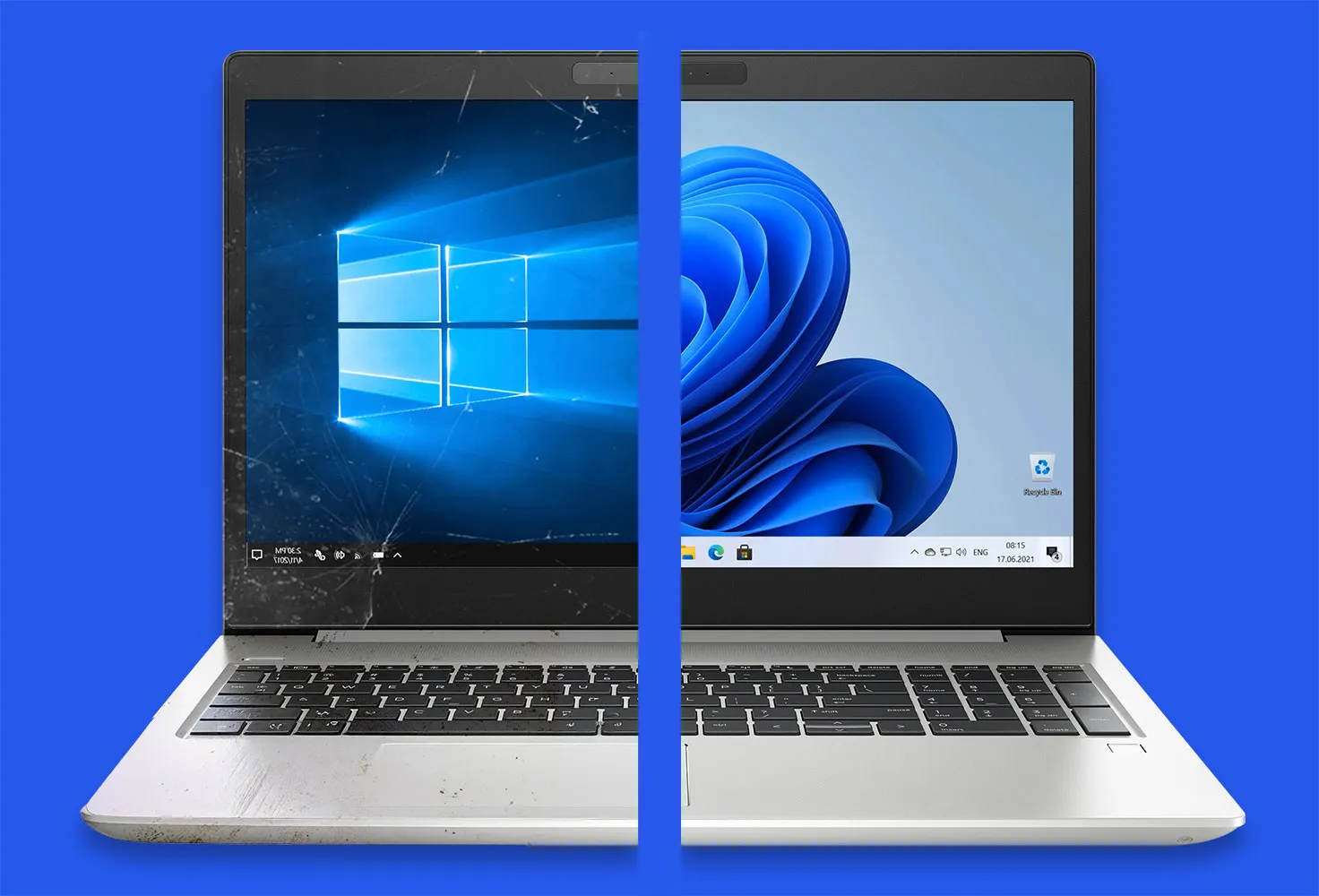
Bye bye, Windows 10!
Hallo,
Windows 11!
Unser ganzheitliches Löschungs-Konzept umfasst Abholung, Auditierung, Datenvernichtung, Aufbereitung und Vermarktung – effizient und sicher.
Dank modernster Technik und eigener Software in unserem Technologiecenter vermarkten wir gebrauchte IT datensicher und transparent wieder oder führen sie verantwortungsvoll dem Wertstoffkreislauf zu.
Seit mehr als 25 Jahren unterstützen wir Unternehmen dabei, ihre gebrauchte IT sicher und effizient wiederzuverwerten oder fachgerecht zu entsorgen. Dabei legen wir besonderes Augenmerk auf Datensicherheit, Sorgfalt und verantwortungsbewusstes Handeln.

Wir verstehen uns als konstruktive Aktivisten, die sich gegen die Verschwendung von natürlichen Ressourcen im IT-Bereich und für den verantwortungsvollen Umgang mit Daten einsetzen.
So fördern wir die Kreislaufwirtschaft und bieten langlebige, qualitativ hochwertige IT-Lösungen.



Vahdath Mala is a gem of South Asian Islamic mysticism, making profound theology accessible through folk poetry. While a PDF may be hard to locate in the original script, its spiritual essence remains alive through oral transmission and study circles.
(Unity of Existence). This mala focuses on the philosophical and spiritual aspects of Islamic monotheism and the path to divine realization. Language & Style : It is composed in Arabi-Malayalam
Traditionally, a "Mala" in Mappila literature refers to a garland of verses composed in Arabi-Malayalam (Malayalam written in Arabic script) that praises saints, explores mystical concepts, or chronicles Islamic history. The specifically delves into:
Would you like more information on Vaikom Muhammad Basheer or Malayalam literature?
The core theme of the is the Sufi doctrine of "Vahdath" (Unity). It guides the believer through the intricacies of the Nafs (ego) and the Ruh (spirit), encouraging the practitioner to transcend worldly desires to reach the Qalb (heart), the repository of divine knowledge.

Partnerschaft